

Immunization compliance, vaccine passport control, and campus surveillance
Some universities in Ontario are implementing systems of pretty egregious levels of digital surveillance in the name of immunization compliance.

Graham Cox is a labour union researcher at Unifor focusing on economic, bargaining, and policy in the energy, road, rail, and marine sectors.
Previous to Unifor, Graham was a researcher at the Canadian Union of Public Employees (CUPE). At CUPE his work focused on economic and policy analysis for the anti-privatization, trade, post-secondary education, utilities, employment insurance, special projects, and organizing files.
Before working at CUPE, Graham served the student movement as National Researcher of the Canadian Federation of Students and chairperson of the National Graduate Caucus.
Graham has worked as a union organizer for the PSAC, CUPE, and the CFS with a focus on graduate student teaching assistant, research assistant and contingent academic staff union drives. This included leading drives to organize academic workers at the University of New Brunswick, UPEI, and Memorial University of Newfoundland.
Please also see articles under the author Editors (What’s left).
Some universities in Ontario are implementing systems of pretty egregious levels of digital surveillance in the name of immunization compliance.
The lesson of the concurrent global crises is that the techno-utopian dreams of San Francisco bros are not going to save us. We cannot individually buy our way out of the crisis. As the saying goes, we are not safe until everyone is safe. The new realization that we are -- literally -- in this together is like everyone becoming a socialist overnight without fully understanding the implications. Yes, we are in this together and there are solutions.
The current long-term care model is designed to squeeze costs using a private delivery process. It is the state that sets the terms of spending and care delivery. The private system is being used to limit costs through obscuring the state's role in under-funding the service.
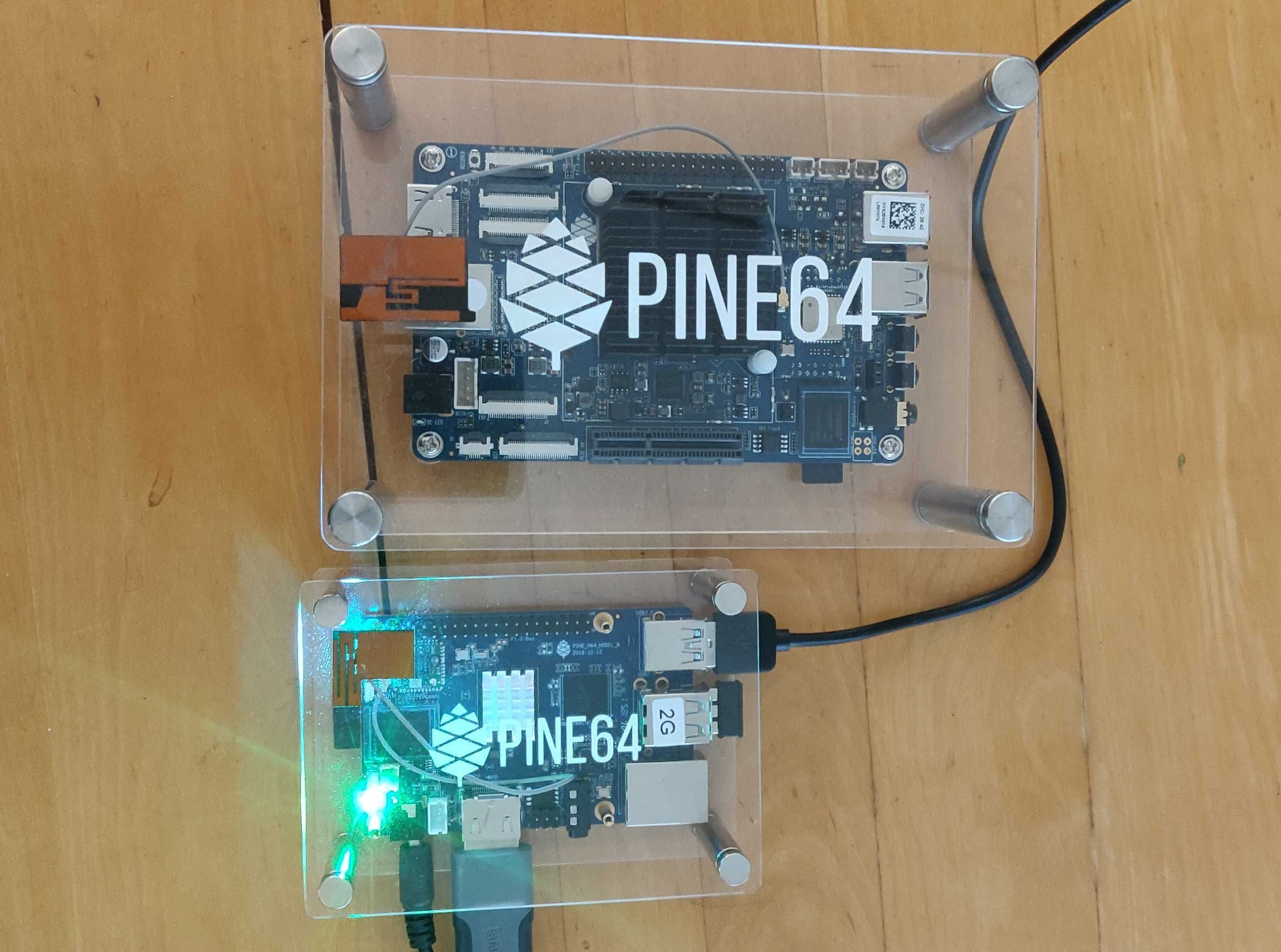
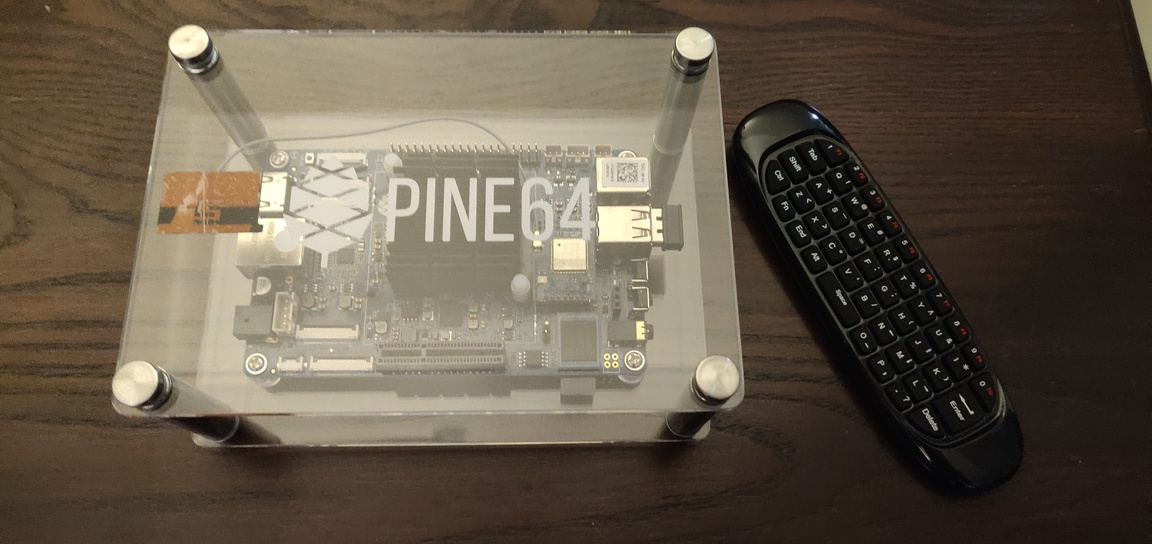
As part of my evangelism around free software, I have provided several of my friends and comrades with one of two Pine64 devices with Linux pre-installed. These boxes are to introduce people to this world of free software (and the freedom it brings) and to provide a useful and (hopefully) a little fun computer/server/gaming platform to tinker with. While you may not be on my list of people who get one of these, you can always buy one from Pine64 (or another single board computer company) and take them out for a spin.
The news out of Laurentian is devastating. Unfortunately, the Companies' Creditors Arrangement Act (CCAA) process that Laurentian was forced into by the government -- with an all too willing administration -- was always going to result in this kind of destruction. The CCAA process has been entirely inappropriate in its application to this public institution.
We are told that Capitalism, at its core, is a crisis-driven economic system. Crises are at the heart of its innovation, transformation of the economy, and are the reason creative destruction is the defining point raised by proponents of this economy-first, anti-social system. However, any reader of history knows that it is only through the leverage and investment of the state that capitalism can find the path around the economic crises it creates. Capital needs to be held-up and protected or -- like most short-sighted adventures -- it runs aground. The alternative is not to hold capitalism up, but to replace it and the response to COVID-19 shows a way forward.
The goal here is to build something that can operate with your TV/monitor and act as a dedicated box for video conferences using any platform you choose including the free and open source Jitsi Meet and Jami/Together. The experience of video calling at home while you sit on a couch or comfy chair is great. The entire experience on a larger than your laptop screen and quality sound really raises video chats with friends to as close to hanging out in your living room as possible.
Decades of neoliberal political narratives have attempted to convince us that the only reason for public ownership is to subsidize private capital growth. Neoliberal economics are focused on the transfer of wealth from the public to private capital through commodification of public assets and services. The result has been a society tilted in favour of profit generation through public subsidies of infrastructure and services over human need.
The best thing a government can do in the height of a recession that is being compounded by a pandemic is invest in the education of its population. Higher education -- when done well -- creates a citizenry who are able to respond to crises and develop the solutions to address the needs of themselves and their communities. Unfortunately, in Ontario we have abandoned support for higher education. Instead, the government is determined to drive an ideological agenda to distort the labour market, make workers pay for job losses, reduce access to higher education, and undermine the advanced education and research system that supports Ontario's economy.
Since the early 1980s, central banks and governments of top capitalist countries have been attempting to save their beloved system. Responding to the collapsing profit rate was their ultimate goal and drove economic and social policy for 40 years. To save our economy and solve the social, health, and environmental crises we now face we must reverse course.